AI Styling in PDP: layout, inspiration and branding for a new product experience
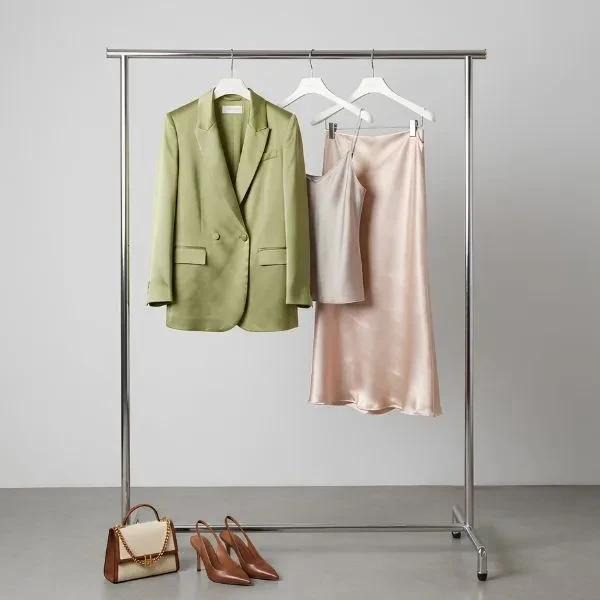
How to turn the PDP into an inspirational experience with outfits
In fashion e-commerce, the product page is no longer just where users evaluate functional information like size, color, price and availability. The PDP has become a strategic touchpoint where inspiration, personalization and performance must work together to drive the purchase decision.
Users aren’t just looking for a product, but for a relevant style suggestion: they want to understand how to wear it, how to pair it and on which occasions to wear it. That’s why the PDP can evolve from a product page into a dynamic space for discovery, able to increase engagement, browsing depth and cross-selling opportunities.
In recent years many brands have invested in editorial content, lookbooks and storytelling to make the online experience more aspirational. However, this content often stays separate from the moment closest to conversion: the product page.
Bantoa’s Outfit Composer was created to bring this inspirational component directly into the PDP, through outfit suggestions generated and personalized with AI logic. The solution lets you showcase the catalog, offer total looks consistent with the brand identity and turn every product page into a gateway to complementary categories, with a measurable impact on interaction, time on site and average cart value.
From product recommendation to style advice
Traditional e-commerce recommendations follow a functional logic: “you might also like,” “other customers bought,” “similar products.” Outfit Composer introduces a different logic: it doesn’t simply show more products, but builds complete outfit suggestions around the item the user is viewing.
Every look is built by combining multiple layers:
The result is cross-category browsing that helps users picture the product in a real-world context and, at the same time, lets the brand showcase the catalog consistently.
The data collected by Outfit Composer shows the potential of this integration: around +10% interaction rate, an average CTR around +2%, a +19% increase in time on site and a +5% increase in AOV thanks to the suggested complete outfits. In addition, customers interacting with outfits grow by +10%.
Numbers that confirm how inspiration can become a concrete lever for engagement and performance, without giving up the brand’s visual and communication consistency.
From product recommendation to style advice
When you integrate an AI styling solution into the PDP, it’s not only the quality of the generated outfits that matters, but also how they’re distributed within the user experience.
Every brand has its own visual language, specific commercial goals and a different level of digital maturity. That’s why Outfit Composer doesn’t offer a single layout, but several display modes designed to adapt to the tone of voice and brand strategy.
The goal isn’t to add a standard module to the product page, but to create a native inspirational layer that fits into the customer journey without interrupting browsing. This way, the PDP becomes a more dynamic, higher-performing touchpoint: it showcases the catalog, encourages discovery of complementary products and turns the outfit suggestion into an experience consistent with the brand identity.
Product Stripe
The Product Stripe display shows the outfit’s products in a dedicated band within the PDP. Users see the main item together with the suggested pieces to complete the look, with the option to explore each product through a detail window.

Pros of this display
This mode is particularly effective when the brand wants to introduce inspiration in a simple, orderly and easily recognizable way. The Product Stripe keeps a structure very close to traditional e-commerce logic: product cards, clean images, item name, price and call to action. That makes it a good fit for brands that want to test the impact of outfits on the PDP without radically changing the user experience. A further advantage is the ease of integration and the possibility of customization. The stripe can be customized to respect the palette, fonts, spacing and visual hierarchies already on the site, keeping continuity with the brand’s communication.
The Product Stripe logic aligns with the KPIs most directly tied to product discovery: interaction rate, CTR and cross-selling. By showing complete outfits in a clear, browsable band, the brand can increase user interaction with categories other than the product being viewed, helping raise the average cart value.
It’s the recommended mode when the goal is to maximize feature adoption and quickly measure the impact on engagement and clicks to complementary products.
Stripe no-still
The Stripe no-still display presents multiple outfits in sequence, without resorting to a still-life or moodboard composition. Products are shown individually, organized by look, keeping the read immediate and modular.

Pros of this display
Stripe no-still is also effective from an operational standpoint: it lets you add outfit content modularly, is easy to integrate into the existing layout and is visually controllable. The absence of complex graphic compositions simplifies alignment with the brand’s UX and reduces implementation complexity, keeping the PDP tidy, consistent and performance-oriented.
This display is particularly effective for e-commerce brands that shoot items on models, because it uses the product images already available without requiring dedicated ghost or still-life images to be generated.
This way Outfit Composer makes the most of existing assets, simplifies adding outfits to the PDP and creates new opportunities for interaction, guiding users toward complementary products and complete looks.
Stripe detail
Stripe detail places outfits closer to the informational and decision-making area of the PDP. Looks are presented as contextual content, directly tied to the main product.

Pros of this display
This mode is a good fit when the brand wants inspiration to be an integral part of the decision process. Users don’t have to scroll far down the page to discover how to complete the look: the suggestion arrives at the moment they’re evaluating the product.
Stripe detail helps reduce uncertainty and put the viewed item in better context. Seeing right away how a product can be paired increases understanding of its potential and makes it easier to imagine it in one’s own wardrobe. From a user experience standpoint, it’s a form of style advice built into the PDP, without interrupting the browsing path.
Stripe no-still is also a highly controllable solution visually: the absence of complex graphic compositions makes it easier to align the interface with the brand’s aesthetic and tone of voice.
The proximity between the main product and the outfit suggestion can positively affect CTR and AOV. The customer is already at an advanced stage of evaluation: offering consistent, complementary items at that moment increases the likelihood of exploring other products and building a fuller cart.
Bundle
The Bundle display presents the outfit as a coordinated set of products, emphasizing the “complete the look” logic and the ability to buy multiple items together.

Pros of this display
The Bundle is the mode most focused on commercial performance. It turns the style suggestion into a concrete offer: not just “see how you can pair it,” but “this is the complete look.”
The benefit is twofold. On one hand, the customer gets clearer, more immediate visual guidance. On the other, the brand showcases often less-explored categories, such as accessories, footwear, bags or complementary pieces.
Even for brands with a strong focus on image and communication consistency, the Bundle can be an effective solution. When built with a careful selection and blended harmoniously into the PDP, it can be perceived as a styling suggestion rather than a simple sales pitch.
The Bundle is the mode most directly linked to AOV growth. Outfit Composer records a 5% increase in average cart value thanks to the suggested complete outfits: a figure that confirms how the total look can generate value not only in engagement but also in revenue.
It also encourages the discovery of complementary categories and helps develop a buying logic closer to the idea of a complete outfit. It’s a mode particularly well suited to brands that want to use Outfit Composer as a conversion lever, as well as an engagement one.
Moodboard
The Moodboard display presents the outfit as a more editorial visual composition. Products aren’t just listed but arranged on an inspiration board that evokes the language of lookbooks, magazines and visual merchandising.

Pros of this display
The Moodboard lets you turn the PDP into a brand experience piece of content. Users don’t just perceive a recommendation, but an aesthetic proposal. The product is placed in a coherent visual universe, where proportions, pairings and style contribute to the brand’s narrative. For this reason it’s a particularly interesting mode for brands that invest heavily in editorial content and image.
The Moodboard also lets you bring in inspiration without giving up the personality of your site, keeping strong continuity with campaigns, lookbooks and communication content.
The Moodboard mainly helps increase time on site and interaction. Users are invited to explore the look as visual content, not just as a list of products.
At a time when fashion e-commerce is becoming more and more like an interactive magazine, this format is an effective tool for combining storytelling, product discovery and personalization.
Virtual Try-On
Virtual Try-On takes outfit visualization to an even more immersive level: the total look isn’t just suggested, it’s shown being worn, set in a visual context consistent with the brand’s storytelling.

Pros of this display
This format has strong inspirational value because it lets users instantly see the complete look in a realistic, aspirational setting. It doesn’t just show individual products, it builds a true style scene, helping customers imagine how the outfit can be worn and lived in.
For brands, the benefit is twofold: on one hand it increases engagement, because it makes the PDP more dynamic, visual and engaging; on the other it supports conversion by closing the gap between product and purchase desire. Users no longer have to imagine the end result: they see it already put together, worn and in context.
Another distinctive feature is the ability to generate settings consistent with brand guidelines. Background, mood, lighting and visual context can be created in line with the brand’s identity, maintaining continuity with campaigns, lookbooks and the site’s visual direction.
Virtual Try-On is particularly effective on engagement and conversion KPIs. Showing the total look being worn raises user engagement and brings the experience closer to a digital styling consultation.
This format can help increase time on site, browsing depth and purchase intent, especially when the goal is to showcase complete outfits, capsule collections or highly style-driven products.
Which format to choose?
There is no single right display. The choice depends on the brand’s goals, positioning and level of digital maturity.
A brand that wants to start gradually can begin with “Product Stripe” or “Stripe no-still”, both discreet and easy-to-integrate solutions. A brand that wants to focus on conversion may prefer the “Detail Stripe” or the “Bundle”. Those who instead want to emphasize the editorial and storytelling side can turn to the “Moodboard”.
This is exactly the strength of Outfit Composer’s modularity: the same styling experience can be translated into different visual experiences, more or less editorial, more or less conversion-oriented, always respecting the brand’s identity.
The AI layer for agencies working with fashion and lifestyle brands
Outfit Composer is also the ideal solution for communication agencies working with e-commerce clients in fashion and lifestyle.
Integrating it means immediately offering extra value: a customizable AI styling system that turns the product page into a more engaging, inspirational and conversion-oriented experience. Every element can be adapted to the brand’s DNA: from layout to visual composition, from tone of voice to outfit selection, all the way to perfect consistency with campaigns, lookbooks and guidelines. The real strength is flexibility. The agency keeps creative and strategic control, while Outfit Composer adds a scalable technology layer that generates personalized outfits and integrates them seamlessly into the e-commerce experience.
The result? A more complete and competitive offering that combines creativity, technology and performance. With Outfit Composer, agencies can help their clients stand out, strengthen their brand identity and achieve concrete results in engagement and sales.
Inspiration as the new infrastructure of the PDP
In 2026, inspiration will no longer be content separate from purchase: it will become an integral part of navigation.
The PDP will still need to inform, but also to suggest, tell stories and guide. It will have to help users understand not only “what it is” about a product, but “how it can be worn,” “what it goes with” and “why it’s relevant to their style.” In this scenario, personalized outfits are one of the most effective tools for combining user experience and business results.
Outfit Composer makes this possible with an approach that is controlled, measurable and consistent with the brand’s identity. Artificial intelligence doesn’t replace the brand’s stylistic vision: it makes it scalable, turning every product page into an opportunity for inspiration and discovery.
More articles dal panorama fashion-tech


Want to become the next case study?
Discover how Bantoa solutions can grow your brand.